My Brick Lane
A History by Anjoli Chatterjee

Let me start with a disclaimer. I am not a historian. I run a restaurant called Tandoori Knights and a detective agency, although the second business tends to be quiet until somebody is murdered, kidnapped or burgled. I am writing this because one of our regular diners, a thriller writer named Ajay Chowdhury (I have read none of his books, although I hear they are decent), asked me to produce a piece for his website. He said I would have an interesting take on the area.
So I thought, why not? Those words often precede my biting off considerably more than I can chew, and so it proved. I did reams of research, disappeared into several unnecessary internet rabbit holes, and finally walked the length of the street, dictating into my phone on what turned out to be the hottest day of the year.
Against expectations, I learned a great deal about my neighbourhood. Some of it was fascinating, some of it was sad, and some of it was just plain weird.
I am hungry.
This is not unusual.
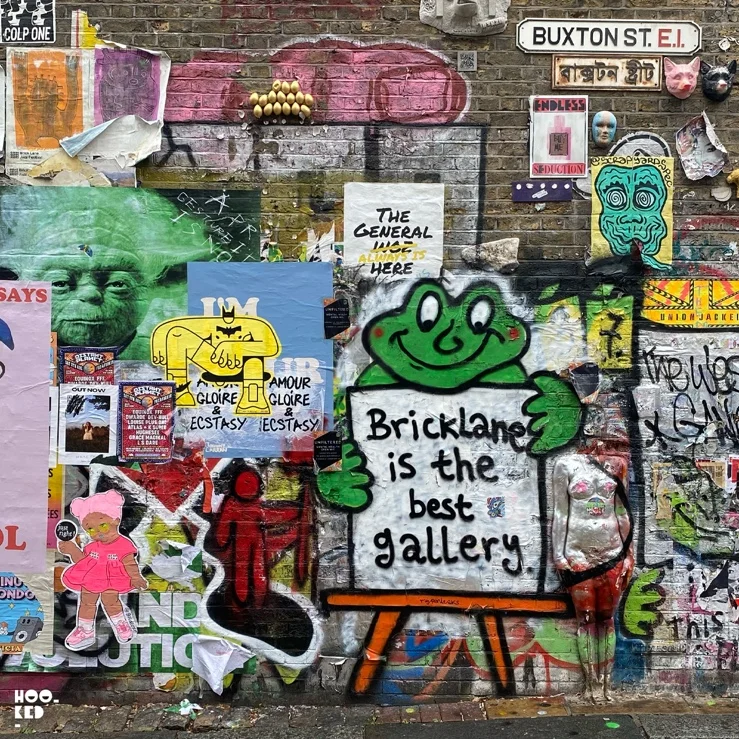
I am standing at the Whitechapel end of Brick Lane beneath street signs written in English and Bengali. The smell of frying lamb samosas is drifting towards me. Does walking the entire length of the road still count as exercise if I buy one on the way? I mean, yeah. ‘Course it does.
Before we begin, a warning.
Brick Lane does not have a simple history.
Tour guides like simple histories. They fit neatly between tourist stops and leave everyone time for lunch. My street has never shown the same consideration. Its communities do not queue politely, enter one at a time, contribute a signature dish, and disappear. They overlap. They borrow from one another. They argue, work, pray, protest, fall in love, and occasionally open restaurants with names no one in their supposed country of origin would recognise.
My family is one tiny part of that history. I say tiny because my father will never read this. If he did, our contribution would immediately become one of the defining achievements of the British Bengali community, possibly ranking just below the invention of the cricket bat.
So this is the history of Brick Lane.
Or my version of it, anyway. On this street there are zillions.
What’s in a name?
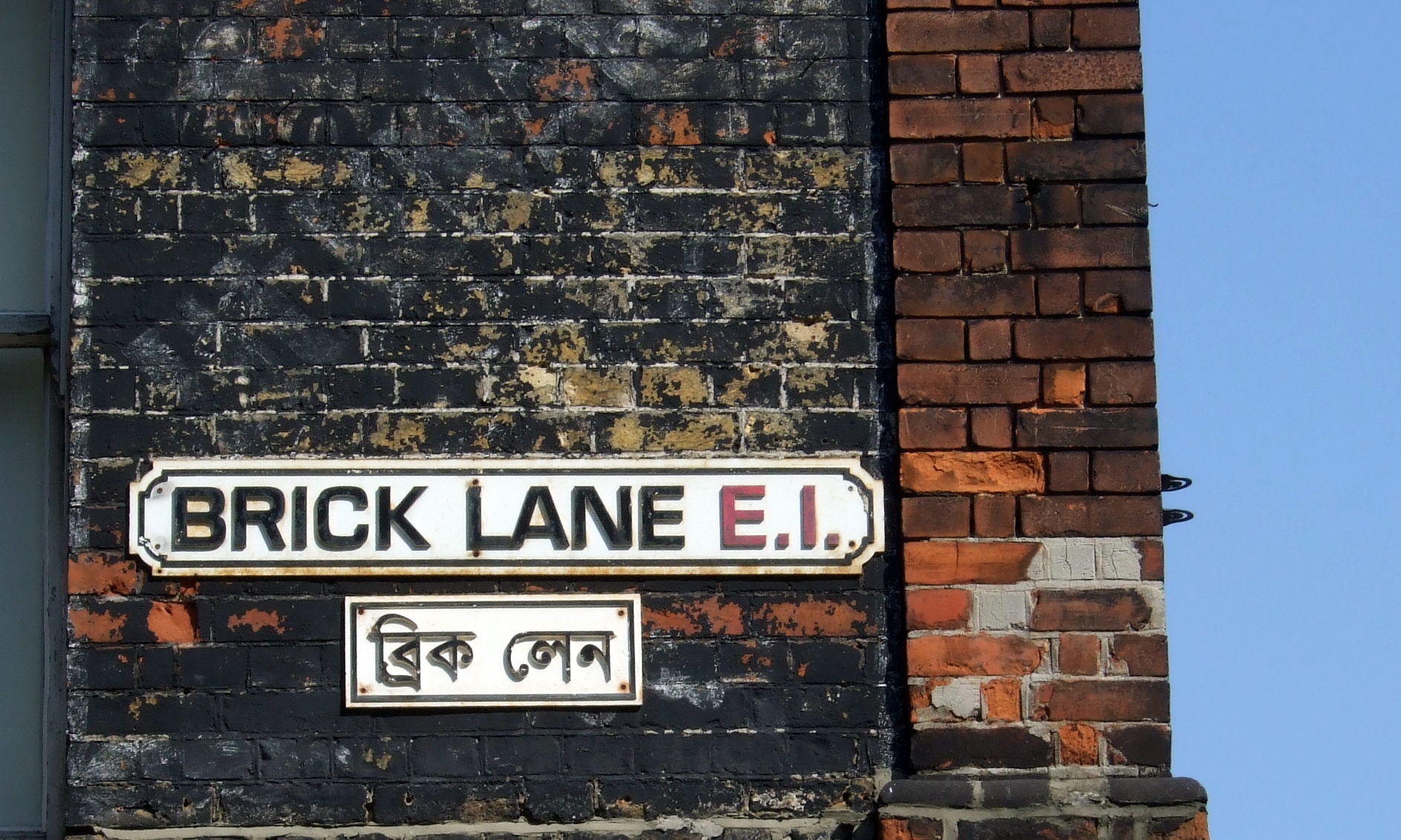
By the sixteenth century, Brick Lane existed as a path running through fields beyond the walls of the Tower of London. I don’t like to talk about the Tower because it brings back memories I’d rather not relive, so that will not form part of this story.
The surrounding land was used for farming, archery, and brickmaking, using kilns introduced by Flemish settlers. Hence Brick Lane. I had lived here all my life without once wondering why it was called what it was called. It was simply home.
Its position outside the City made the lane useful for activities that were noisy, dirty, smelly, or inconvenient. The East End would continue to perform this service for several centuries, usually while richer Londoners complained about the noise, dirt and smell but remained happy to benefit from whatever was being produced. When Kamil and I visited Dharavi in Mumbai, where he had been summoned to investigate a series of distinctly gory murders, I recognised the same uneasy bargain: essential work kept out of sight of the people who benefit from it. Both places have since been discovered by developers, which is rarely as encouraging as they make it sound.
The East End’s current version comes with tech bros, venture capital and flats advertised using photographs of the culture their buyers are helping to displace. Kamil and I met some of them when we investigated the death of an entrepreneur.
Silk, persecution and very expensive windows
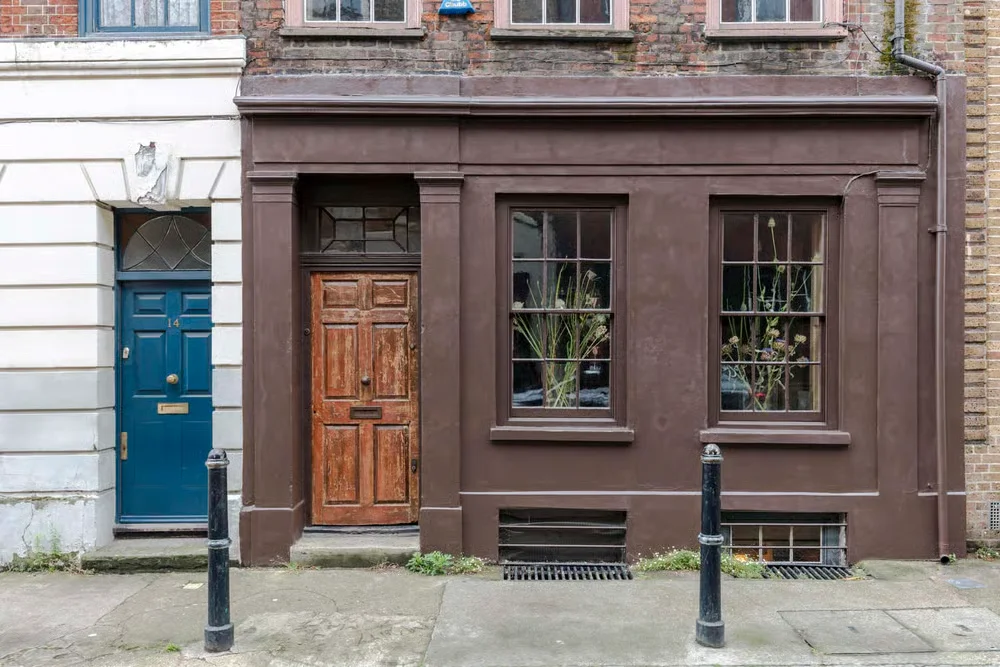
From the 1680s, French Protestant refugees, the Huguenots, began arriving in the East End after fleeing religious persecution. They brought the skills of silk-weaving with them.
Soon, looms were working in houses throughout the area, and Spitalfields silk was being worn by London’s wealthy and fashionable. You can still see the old weavers’ houses around Fournier Street and Princelet Street. Estate agents call them Huguenot houses, which sounds considerably more appealing than a house neither you nor your children will ever be able to afford.
The buildings are beautiful. The work conducted inside them often was not. Entire families laboured at the looms, including children, and lived at the mercy of unstable prices and changing fashions. Those lovely windows were not installed so somebody could sit beside them with a flat white. They were factory lighting.
History prefers its refugees to be successful. It makes migration sound like a sensible commercial decision rather than something people do because remaining at home has become dangerous. Some Huguenots prospered. Others did not.
All of them altered the area.
The business of beer
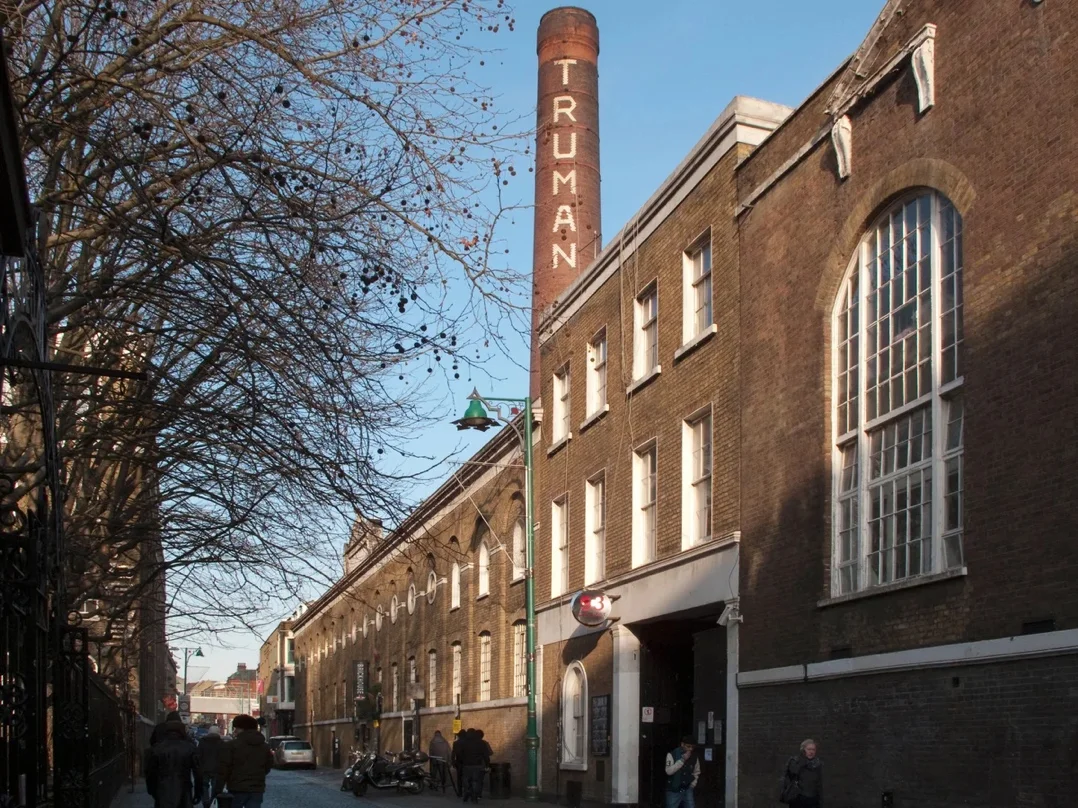
While the silk looms clattered in nearby houses, beer fermented on Brick Lane.
Brewing was taking place here by the 1660s. In 1679, Joseph Truman acquired the brewery that would eventually expand into an enormous complex and become one of the area’s major employers. Malt, hops, smoke, horses and drays dominated this stretch of the street.
Brick Lane Market developed during the eighteenth century as farmers brought livestock and produce to sell outside the city boundary. The animals have largely disappeared, but the Sunday market survives. Necessities have been replaced by vintage clothes, food, and trinkets for tourists. And so it goes.
The brewery finally closed in the 1980s. Its buildings now contain markets, food stalls, studios, offices, shops, and event spaces. I never saw the old brewery, but Ma told me stories about it on those rare occasions when she allowed herself to become nostalgic.
I do not object to the change. Buildings need new uses, and I like a food market as much as the next person. More, if the next person is Kamil, who can spend twenty minutes studying a menu before ordering exactly what he ate the previous week.
One building, several lives
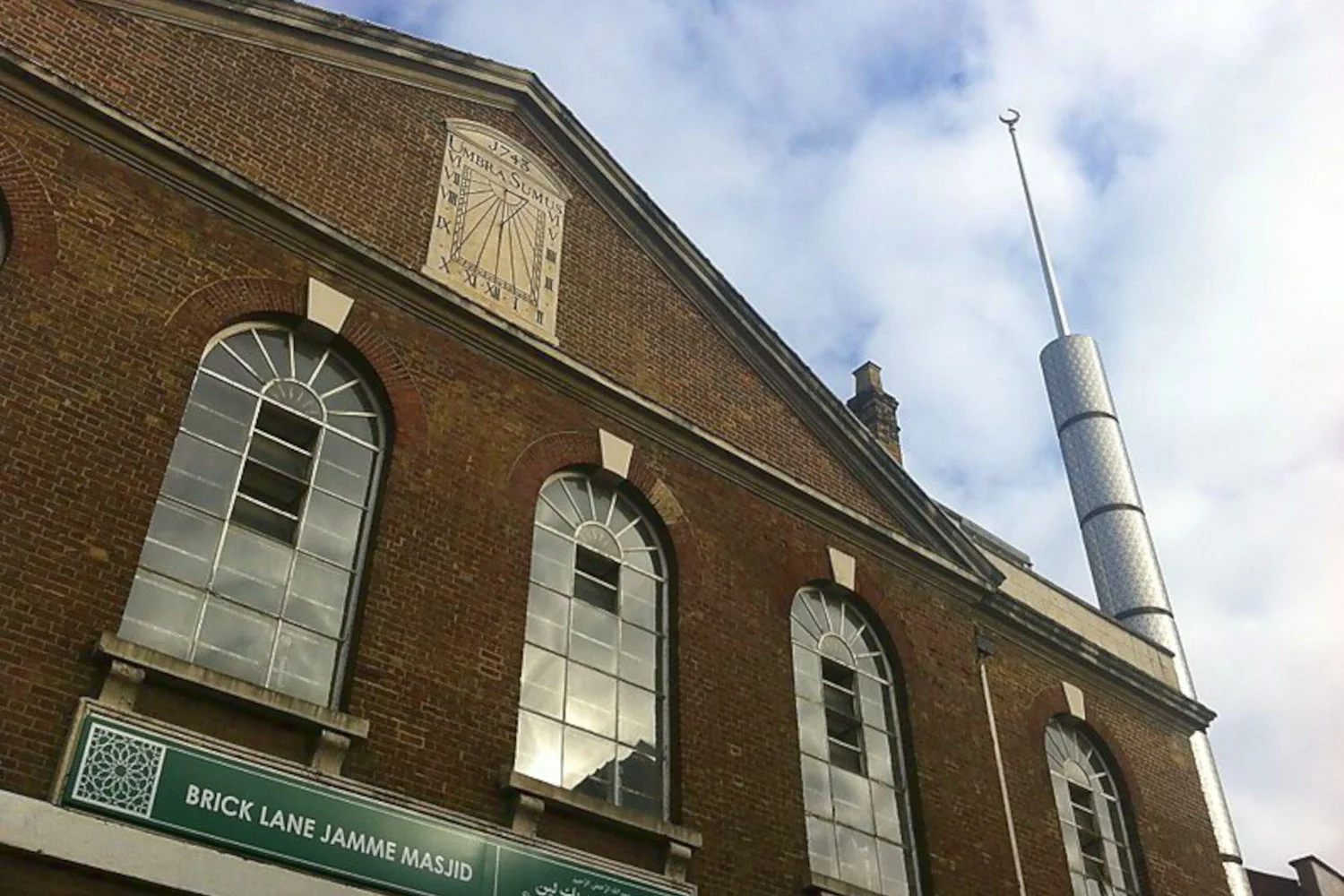
At the corner of Fournier Street stands the Brick Lane Jamme Masjid. If somebody insists on reducing the history of my area to a single building, I point them towards this mosque.
It was built in 1743-44 as La Neuve Eglise, a French Protestant chapel for the Huguenot community. During the nineteenth century, it was used by Christian missionaries and Wesleyan Methodists. In 1897, a Lithuanian Orthodox Jewish congregation acquired it and created the Spitalfields Great Synagogue. In 1976, it became a mosque serving the area’s growing Bangladeshi Muslim population.
Evidence of its different lives remains. Hebrew tablets survive in the upper rooms. A marble mihrab indicates the direction of Mecca below. Above the Fournier Street frontage, an eighteenth-century sundial bears the Latin words Umbra sumus.
We are but shadows.
Cheerful. The eighteenth century was not known for its commitment to emotional well-being.
The lazy version of Brick Lane’s history says that first came the Huguenots, then the Jews, then the Bengalis. As though one community handed the keys to the next and vanished at midnight.
People are less orderly than that. Communities overlap. Families remain after their neighbours leave. Businesses change hands. Skills pass between people who do not share a language or a religion. A chapel becomes a synagogue and then a mosque because buildings, like people, survive by remaining useful.
When I pass the mosque now, I think about how many different prayers those walls have heard. Different languages, different gods, different instructions about what people should eat and whom they should marry.
The last subject alone must have kept the building extremely busy.
Yiddish Brick Lane
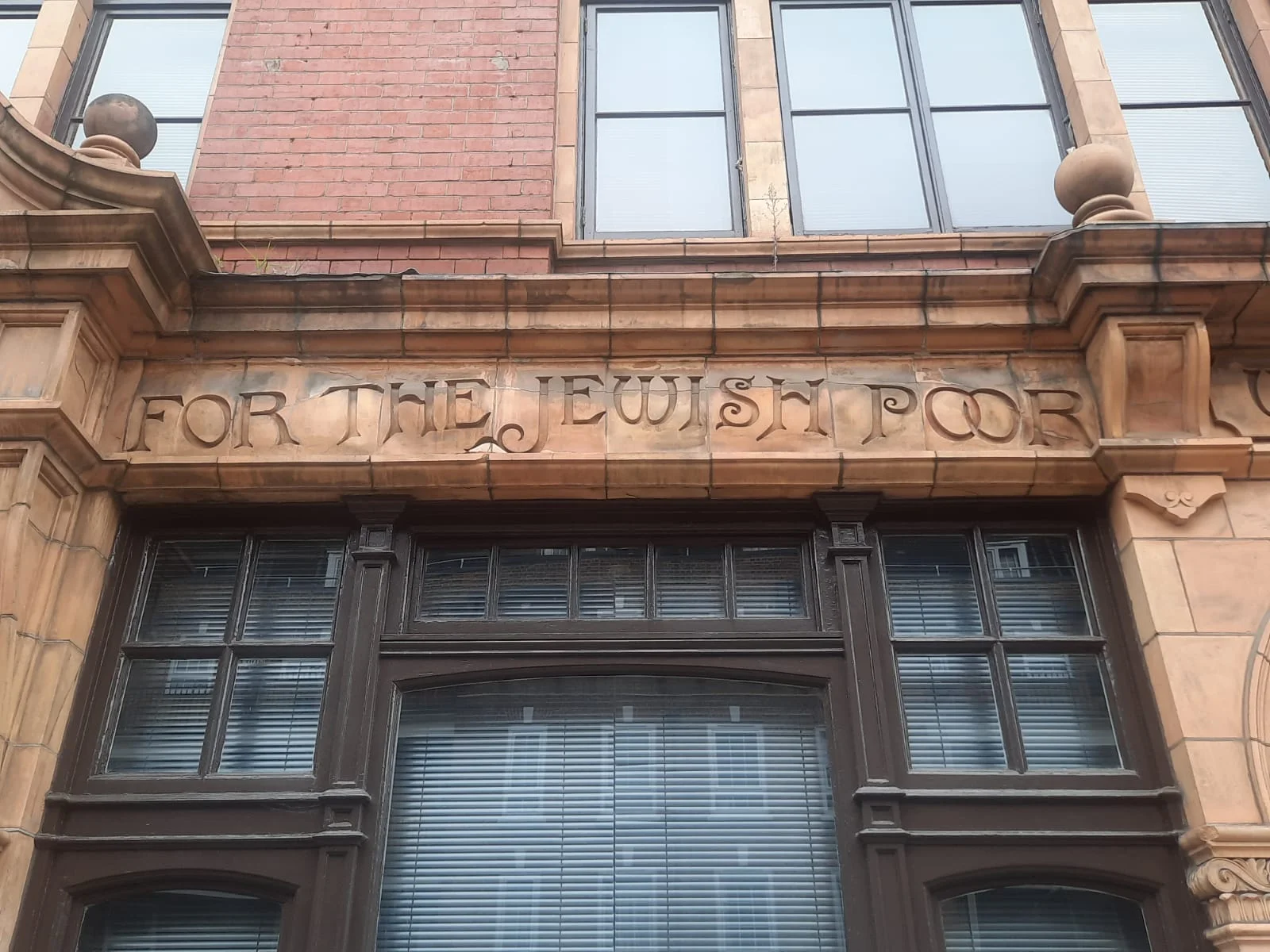
Jewish families had lived in this area since the seventeenth century, but the community expanded dramatically from the 1880s, when thousands arrived from Russia and Eastern Europe fleeing pogroms, persecution, and poverty. I learned more about that history after the skeletons of one family were discovered on a building site, and Kamil and I were drawn into their murders.
Yiddish filled the streets, cafes, workshops, and markets. Newspapers were printed, plays performed, political arguments conducted, and synagogues established in rooms behind houses and shops.
The garment trade became one of the chief sources of work. Clothes were cut and stitched in crowded workshops and rooms throughout Spitalfields and Whitechapel. The Jewish East End produced writers, radicals, entrepreneurs, actors, trade unionists and families determined their children would not spend their lives bent over sewing machines.
That last ambition feels familiar.
My parents did not work every hour available so that I could grow up and do the same. They wanted me to acquire qualifications, a proper career and, in my mother’s preferred version of events, a suitable Bengali husband. Preferably in that order, although she was prepared to negotiate.
As Jewish families became more prosperous, many moved to other parts of London, and the Blitz accelerated their departure. But they left traces everywhere: old shopfronts, former synagogues, fragments of lettering and buildings whose original purposes have been forgotten.
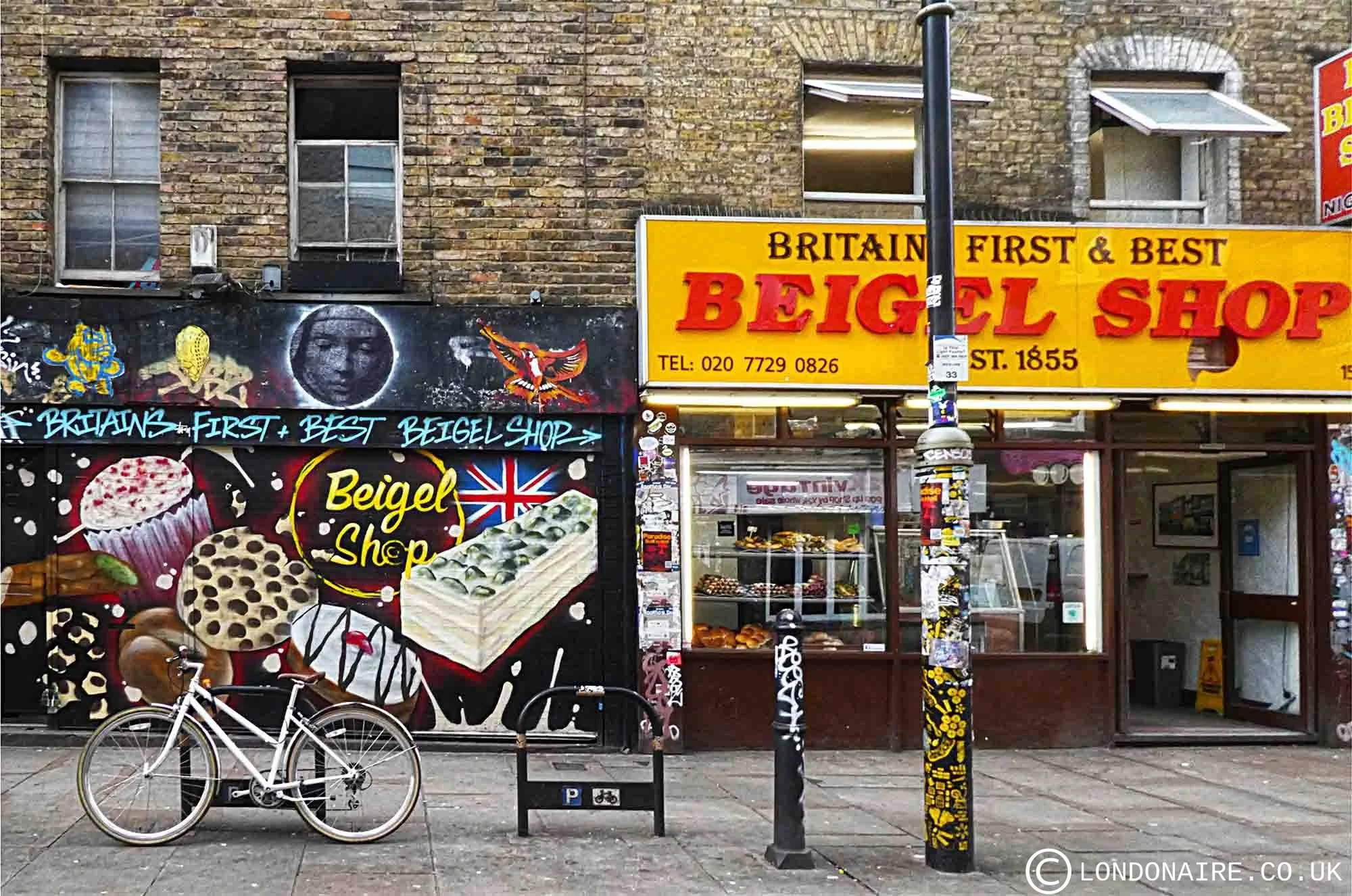
Beigels still emerge from ovens through the night. No serious food street is complete without a queue and a disagreement about which shop is the proper one. For me, it is obviously the First and Best Beigel Shop. I will not be taking questions.
A walking tour passes me. The guide is holding a blood-red umbrella and has stage-whispered the words Jack the Ripper.
I decline the detour.
London has spent more than a century turning an unidentified murderer into a celebrity and the women he killed into a franchise. He receives quite enough attention elsewhere.
From Sylhet to Banglatown
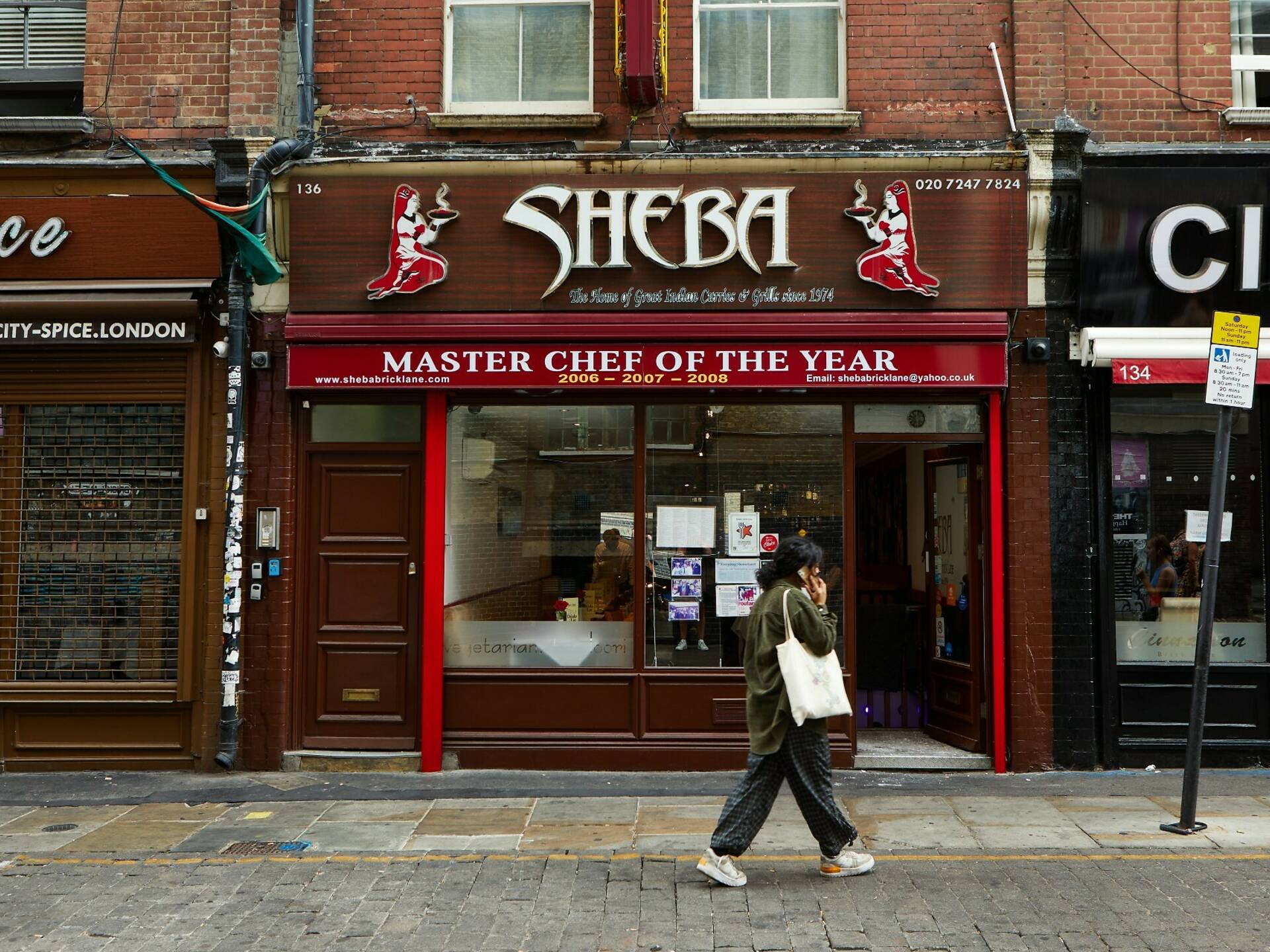
Bengali connections with the East End began long before Brick Lane became famous for curry.
Seamen from the Indian subcontinent, including men from Sylhet in what is now Bangladesh, arrived through London’s docks. They found work in factories and the garment trade, sometimes in Jewish-owned workshops.
And then came restaurants.
Most of the early restaurateurs were from Sylhet, although the food they served was described simply as Indian. Menus developed for British customers acquired a life of their own. Dishes, ingredients and cooking styles from across the subcontinent were gathered under the wonderfully imprecise word curry.
People sometimes ask which Brick Lane restaurant serves the most authentic food.
Authentic to where? Sylhet? Dhaka? Kolkata? Lahore? A British high street on a Friday night? Our restaurant, Tandoori Knights, is a fusion of all of them. Or, as my chef Chanson used to call it, Indicular Gastronomy.
Food changes when people move. That does not make it fraudulent. It makes it diasporic, although putting that on the menu is unlikely to shift many starters.
My parents come from Kolkata, not Sylhet. Indian Bengali and Bangladeshi Bengali are not interchangeable, whatever a taxi driver, television researcher or well-meaning council diversity officer might think. The distinctions matter.
My parents’ Brick Lane
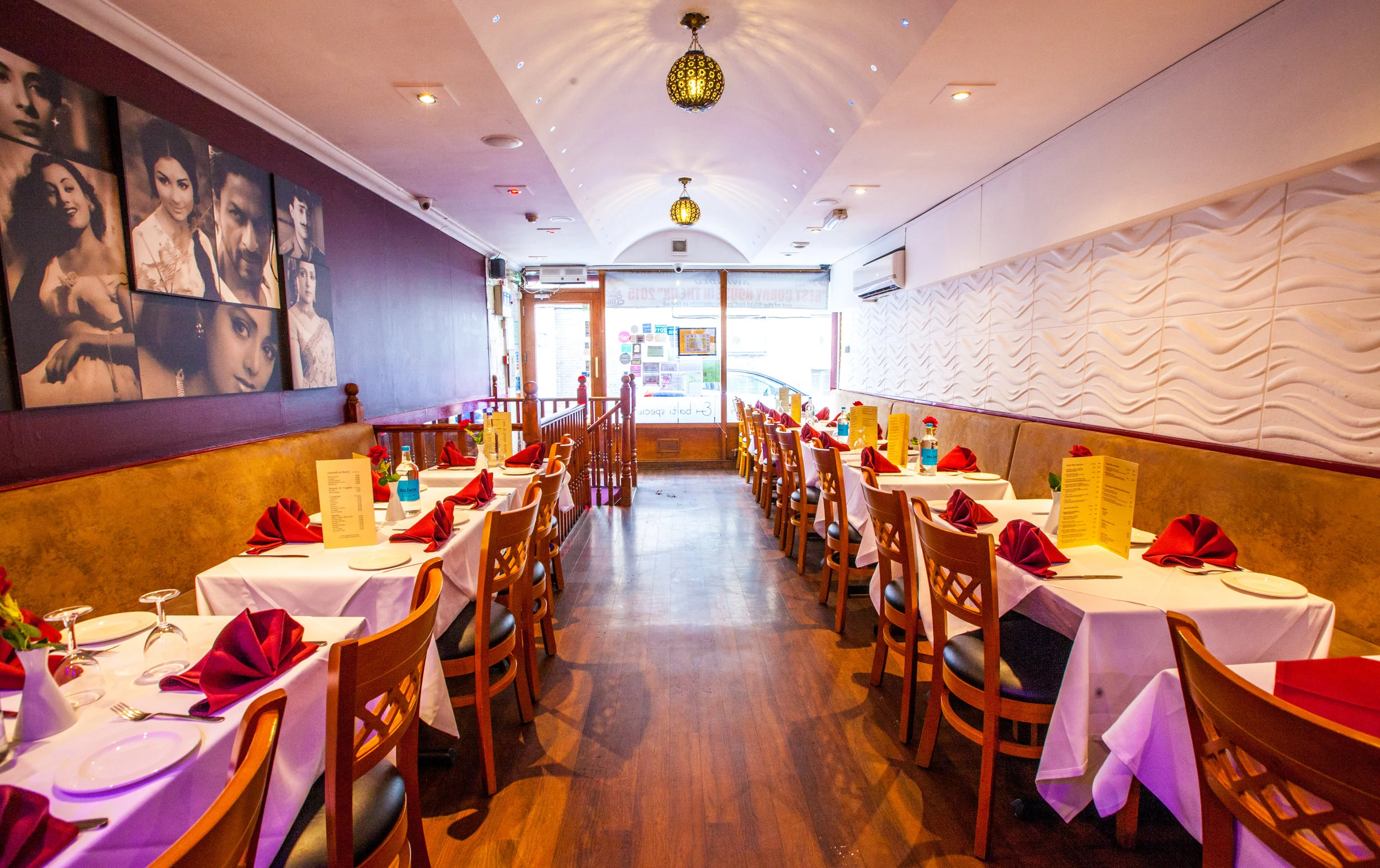
My parents’ London story began long before mine.
Saibal and Maya Chatterjee arrived from Kolkata with the usual migrant mixture of ambition, optimism, and insufficient money. Their first business was a jewellery shop on Ealing Road. Baba imported the jewellery. Ma sold it, kept the accounts and, if family history is accurate, performed most of the tasks requiring common sense.
The shop prospered.
My parents lost everything.
They had a baby on the way, nowhere secure to live, and no financial cushion. Baba, who was not given to admitting fear, later described this period as ‘a little difficult’. This is Bengali father-speak for an absolute catastrophe.
An old friend lent him enough money to begin again. My parents opened a newsagent. As a baby, I spent my days in a basket behind the counter while they worked. Customers sang to me, cooed over me and presumably wondered whether leaving an infant beside the newspapers breached any retail regulations.
The restaurant came later, bought with more borrowed money. Tandoori Knights opened on Brick Lane and became the centre of our family life.
For my parents, Brick Lane was never picturesque. It was rent, stock, suppliers, difficult customers, faulty equipment, and the smell of masala that Baba complained he could never remove from his clothes. It was Ma checking the takings after everyone else had gone to bed. It was both of them working so I could attend an excellent school and go to university.
Naturally, having sacrificed to give me choices, my parents developed strong opinions about which choices I should make.
Ma wanted me to become a senior advertising executive. Baba was proud when I worked in the family business but also complained that I was wasting my psychology degree. Both would have liked me to marry a nice Bengali man with excellent prospects and obliging parents.
Instead, I somehow ended up running a restaurant and helping Kamil investigate murders.
I tried to escape the family business. I studied psychology, worked in advertising and market research, and convinced myself that my future lay somewhere involving presentations, focus groups, and people using the word eyeballs.
Then my parents returned to Kolkata for several months to care for my uncle, and I came back to manage the restaurant.
I told everyone it was temporary.
While they were away, I ripped up the worn carpet, stripped off the faded wallpaper, changed the menu, and built a presence on social media. I borrowed more money than I should have and persuaded the Evening Standard to review us. Younger customers arrived. Business improved.
I even considered changing the name because, frankly, Tandoori Knights is naff.
But I could not do it.
The name belongs to the years my parents spent building the place. To the nights they worked while ill, worried, or exhausted. To all the meals they did not eat together because one of them had to be at the restaurant. I can replace the carpet and modernise the menu. I cannot erase them from it.
I complain about Tandoori Knights constantly.
This is my right. It is also how I show affection.
But back to my assigned task.
A street that fights back
In 1936, Oswald Mosley’s British Union of Fascists attempted to march through the East End. Local residents, trade unionists, socialists, communists and other anti-fascists blocked the route. The confrontation became known as the Battle of Cable Street.
Four decades later, the Bangladeshi community faced racist attacks and organised intimidation. The National Front established a presence around Brick Lane. Bengali workers were abused in the street, assaulted on their way home and made to feel unsafe in their own neighbourhood.
Then, on 4 May 1978, a young Bengali man named Altab Ali was murdered in Whitechapel.
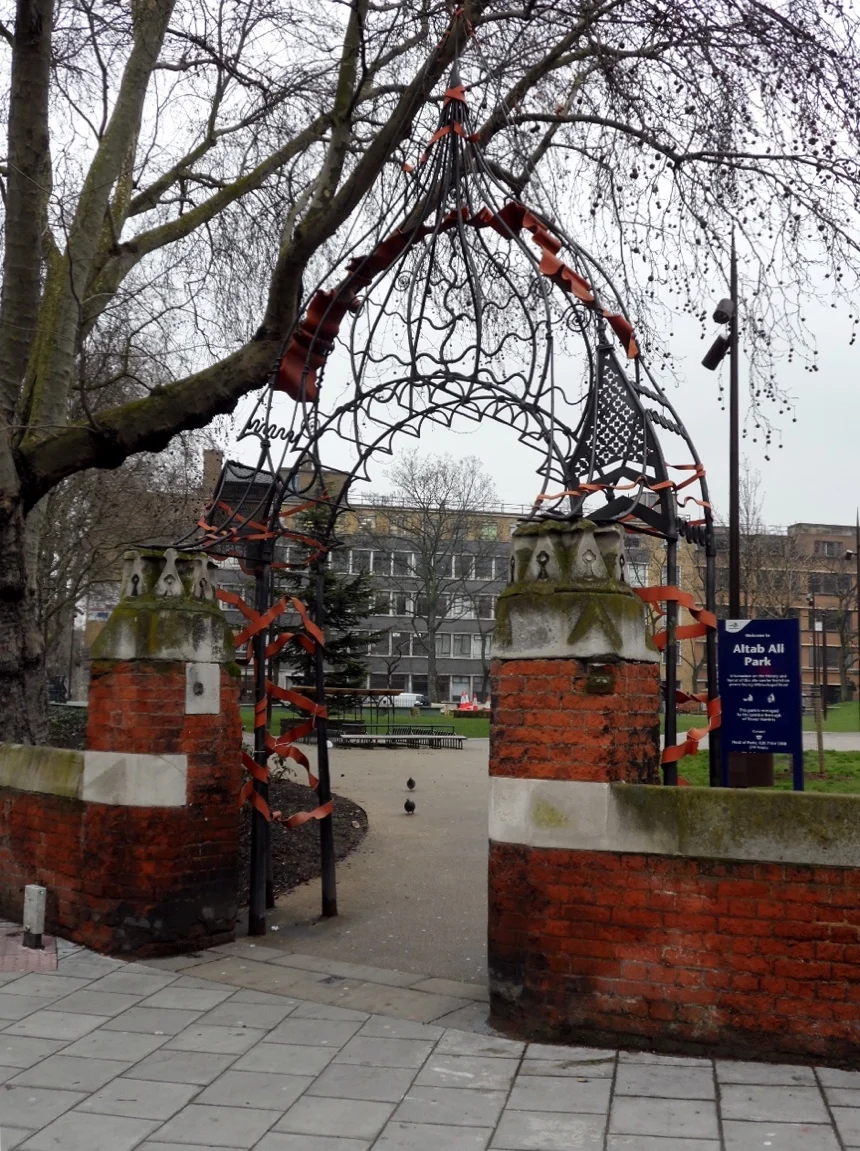
His death became a turning point. Thousands marched in protest, carrying his coffin through London to Downing Street. Community organisations formed. Young Bengalis confronted the racism that had been allowed to flourish around them, and a nearby park now bears Altab Ali’s name.
Families like mine could open businesses here because earlier generations fought for the right to walk these streets without being attacked. That, too, is part of our inheritance.
On 24 April 1999, a nail bomb targeting the Asian community exploded outside the Sweet and Spicy restaurant at 40 Brick Lane. It was the second in a series of attacks on the Black, Asian and gay communities of Brixton, Brick Lane and Soho. Together, the bombs killed three people and injured 140.
My parents never talked to me about that day. I was ten and remember only the restaurant closing early, my parents rushing me up to our flat, shutting the windows, drawing the curtains and plonking me in front of the television.
I could feel the fear coming off them, but was too young to understand its source. Years later, when Kamil infiltrated a terrorist group, I felt the same tension lodge in my body. Only then did I understand how a place remembers.
And now, with the fear of immigrants around the world on the rise again, the fear is back. I am British born and bred, but could someone one day decide that I am not British enough?
Anyway. Moving on.
The latest reinvention
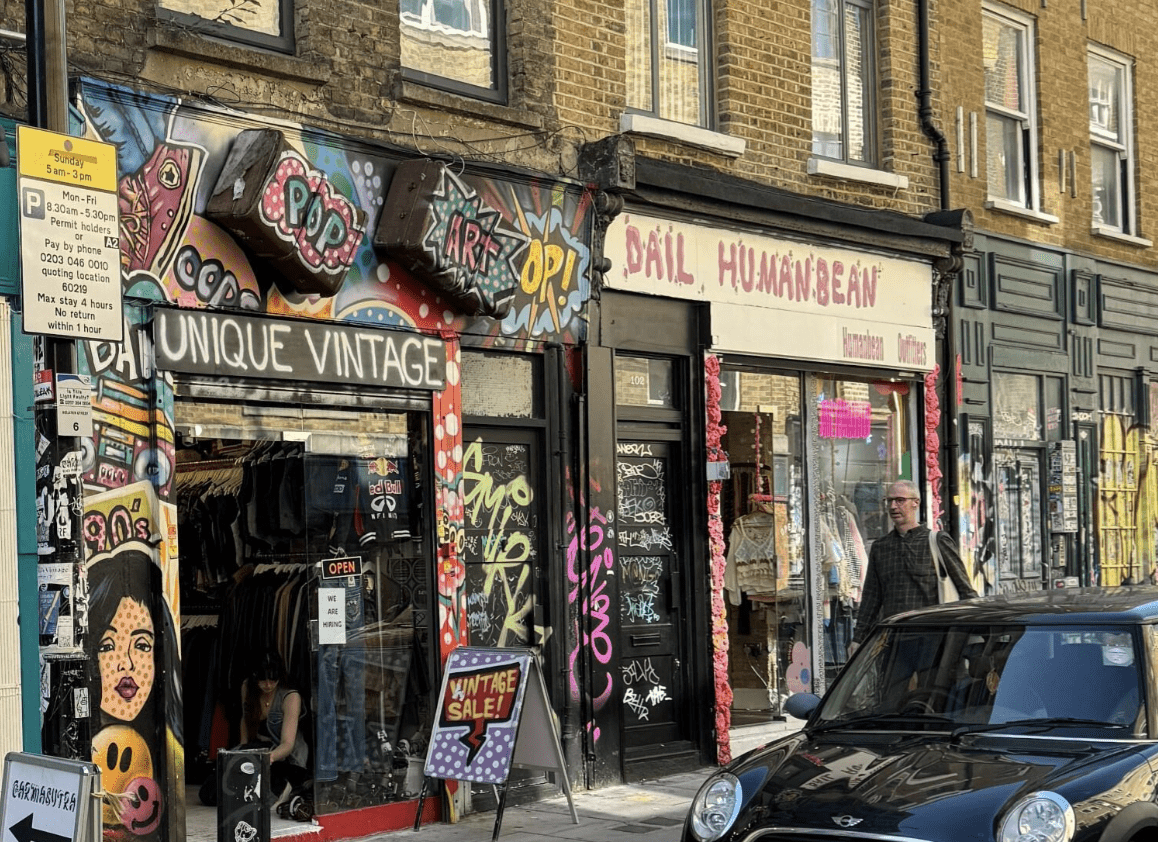
North of the curry houses, Brick Lane changes again.
Railway arches, shutters, and blank walls have become canvases for street artists. Vintage shops abound. So do cafes in which a single coffee costs more than an entire lunch did when I was a student.
I like much of it. This is the irritating part.
I like the street art. I like young designers, peculiar shops, and food stalls selling things I cannot pronounce. I understand places cannot be preserved at a single point in their history.
But I also see what happens when an area becomes fashionable.
Rents rise. Family businesses close. Homes become investments, then short-term rentals. Restaurants that helped create Brick Lane’s reputation struggle to remain on it. The history of migration is celebrated even as migrant families are priced out of the neighbourhood.
Regeneration is a useful word. It makes the people already living somewhere sound as though they were dead.
The newest arrivals are not the enemy. Brick Lane has always been made by newcomers. The problem is a version of change that loves the area’s culture but finds the people who created it inconvenient.
I do not want Brick Lane embalmed. Streets change, or they die. I only want the families who gave this one its character to stay and enjoy some benefits. That does not feel unreasonable.
By the time I reach Bethnal Green Road, my phone is hot, my throat is dry, and the samosa remains theoretical. Behind me are the mosque, the brewery, the beigel shops, the curry houses, the murals, and several centuries of people refusing to disappear.
Brick Lane is my parents’ gamble, my inheritance, Kamil’s patch, and the place I have spent half my life trying to escape and the other half defending. It is irritating, loud, overcrowded, expensive, and mine. Now I am going back for that samosa.